

Focused Shockwave Therapy: Finally Treat Stubborn Injuries
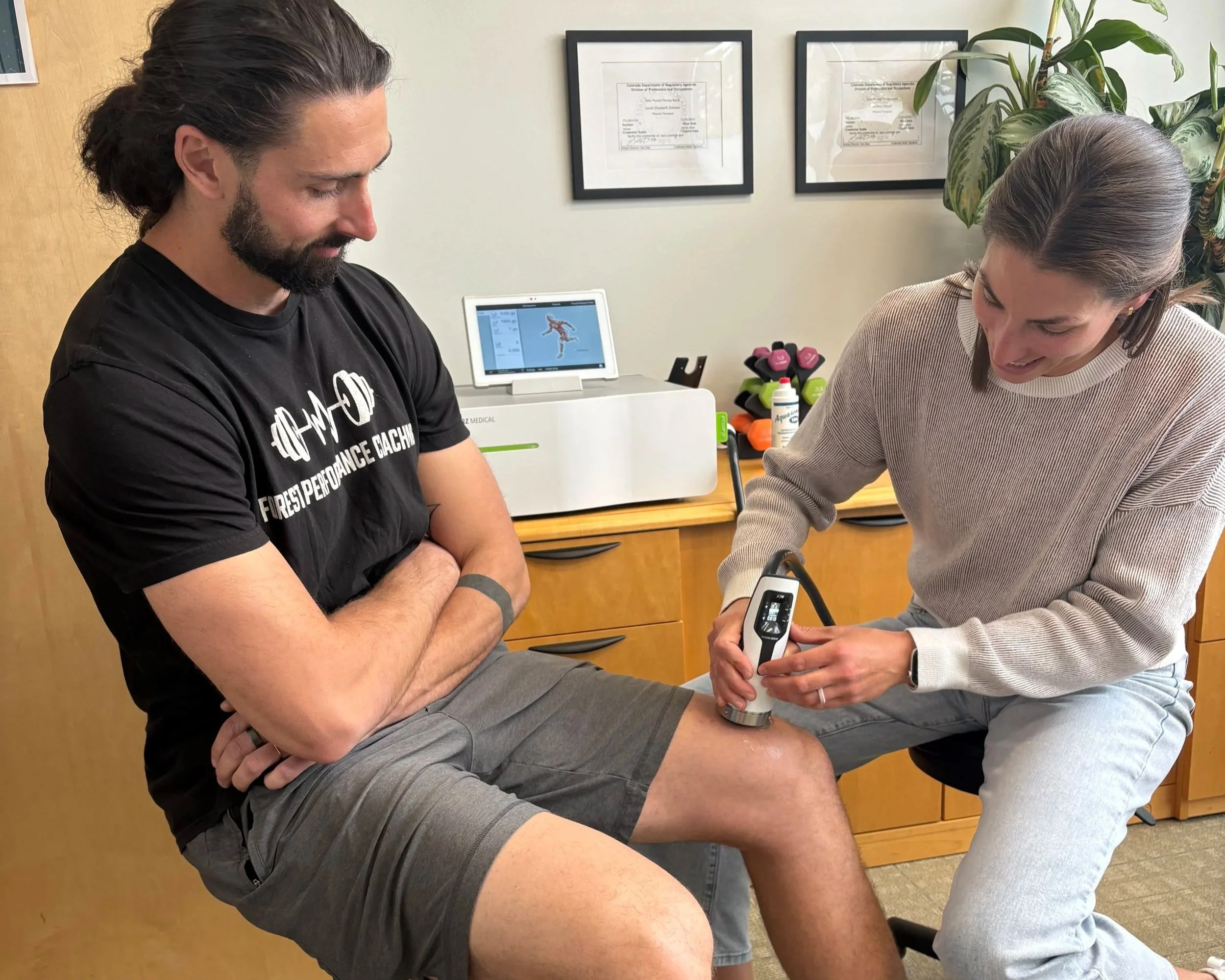
Extracorporeal shockwave therapy (ESWT) is a non-invasive treatment being used in clinics worldwide to enhance tissue healing and help patients recover from chronic injuries that may have once required surgical interventions. Shockwave therapy has evolved into a powerful tool in sports medicine and orthopedic care, particularly for chronic tendon and soft tissue injuries that fail to respond to rest, exercise, or traditional therapy. By promoting blood flow, cellular activity, and tissue regeneration, shockwave therapy is being called upon to revitalize stalled healing processes rather than mask symptoms.
In recent years, growing research has supported shockwave’s clinical effectiveness. For example, a meta-analysis published in 2013 in the American Journal of Physical Medicine & Rehabilitation found that extracorporeal shockwave therapy significantly improved tissue healing markers and, in some cases, outperformed common treatments like corticosteroid injections for pain and function in plantar fasciitis.1 More broadly, a narrative review published in 2023 found shockwave to be a highly effective modality for a variety of tendinopathies (i.e. tennis elbow, hip pain, patellar, achilles, and shoulder), as well as for spinal pathologies, osteoarthritis, and bone lesions. These authors also found that shockwave, “can be used alone or in conjunction with other physical therapies such as eccentric strengthening exercises or static stretching, which can enhance its therapeutic effect.2” In this blog, we will discuss what shockwave therapy is, how it works, which injuries it helps most, and how the integration of shockwave at Boulder Sports Physiotherapy is more effective than the technology itself.
What Is Focused Shockwave Therapy?
Focused shockwave therapy is an advanced, non-invasive treatment that uses high-energy acoustic waves to stimulate healing in injured tissues. Unlike modalities that simply mask pain, shockwave therapy works at a cellular level to promote tissue regeneration and repair. The technology delivers precise, targeted energy to a specific depth in the body—making it especially effective for treating both superficial and deep musculoskeletal injuries.
What Exactly Does Shockwave Do?
Focused shockwave therapy triggers several important biological responses:
Increases blood flow to the injured area.
Stimulates collagen production, essential for tendon and ligament healing.
Breaks down calcifications in soft tissues.
Enhances cellular metabolism and tissue repair.
Modulates pain signals, often providing relief after just a few sessions.
To summarize, shockwave therapy can boost the healing process in tissues that have become stagnant or chronically irritated.
What Conditions Can Shockwave Therapy Treat?
Focused shockwave therapy is especially effective for both acute as well as chronic, stubborn injuries—particularly those involving tendons. These conditions often involve degenerative changes rather than pure inflammation, which is why rest or ibuprofen don’t solve the problem. These are often conditions where patients say, “I’ve tried rest, stretching, strengthening… and nothing seems to stick.” Shockwave therapy can be the missing link that helps your injury finally progress.
Here is a list of just a few of the common conditions that the physical therapists at Boulder Sports Physiotherapy are finding focused shockwave therapy to be effective in treating:
Foot & Ankle
Plantar fasciitis and Heel Spurs
Achilles tendinopathy
Morton’s Neuromas
Bunions
Peroneal or Posterior Tibialis Tendons
Knee
Patellar tendinopathy (“jumper’s knee”)
ITBand Syndrome
Osteoarthritis
Hip
Gluteal tendinopathy
Greater trochanteric pain syndrome
Adductor tendinopathy
Hamstring tendinopathy
Piriformis Syndrome
Elbow
Lateral epicondylitis (tennis elbow)
Medial epicondylitis (golfer’s elbow)
Shoulder
Rotator cuff tendinopathy
Calcific tendonitis
Frozen Shoulder
Bicep tendonitis
Other
Stress fractures
Neck and Low back pain
Shin splints
SI joint pain
Some pelvic floor conditions
What Does Shockwave Feel Like?
During treatment, a handheld applicator is placed over the injured area and the surrounding tissues. You’ll feel rapid pulses or tapping sensations, which may be uncomfortable but are typically well tolerated.
Sessions usually last 5–15 minutes for the shockwave portion.
Most treatment plans involve 3–6 sessions, spaced about one week apart.
Many patients notice improvement within 3- 6 visits.(3)
How Is Focused Shockwave Different From Other Shockwave Therapies?
Not all shockwave therapy is created equal—and this is where many patients (and even providers) get confused. At Boulder Sports Physiotherapy, we use a focused shockwave therapy device which allows us to treat deeper into the tissues while requiring less treatment sessions overall. Here is a comparison of the 2 main types of shockwave therapy: radial and focused.
Focused Shockwave Therapy:
Delivers high-energy waves to a precise depth.
Targets deeper tissues and specific structures.
More effective for chronic tendon injuries and calcifications.
Backed by strong clinical evidence for specific conditions.
Radial Shockwave Therapy:
Uses lower-energy waves that disperse more broadly.
Primarily affects superficial tissues.
Often used for general muscle tightness or mild conditions.
Think of it this way:
Focused shockwave = precision tool (like a laser)
Radial shockwave = broader tool (like a pressure wave massage)
Both have their place—but for stubborn, deep, or long-standing injuries, focused shockwave is often the more effective option.
How Does Boulder Sports Physiotherapy Use Shockwave Differently?
One of the biggest misconceptions about shockwave therapy is that it’s a standalone treatment.
In many clinics, patients receive:
10 minutes of shockwave
Little to no movement assessment or exercise prescription
Minimal follow-up care after sessions are complete
That’s not how real recovery works.
Boulder Sports Physiotherapy’s Integrated Approach
At Boulder Sports Physiotherapy, shockwave therapy is just one piece of a bigger, more effective plan.
We combine it with:
Individualized strength and return to sport programs.
Biomechanical assessment and correction.
Manual therapy techniques (i.e. soft tissue work, dry needling).
Mobility and movement retraining.
Why This Matters
Shockwave therapy helps improve tissue quality—but your body still needs to learn how to use that tissue properly.
Without progressive loading and movement retraining:
The injury may return
The root cause remains unaddressed
Results are often short-lived
Our goal is not just to reduce pain—it’s to build resilience and long-term performance.
Who Is a Good Candidate for Shockwave Therapy?
You may be a good candidate if:
You’ve had pain lasting more than 6–12 weeks
Your symptoms haven’t improved with rest or traditional PT
You’ve been diagnosed with a tendinopathy or chronic soft tissue injury
You want to avoid injections or surgery
You’re motivated to combine treatment with active rehab
Shockwave therapy works best for people who are ready to be active participants in their recovery—not just passive recipients of care.
Risks, Contraindications, and Safety Considerations
Focused shockwave therapy is generally safe and well-tolerated, but like any medical treatment, it’s not appropriate for everyone.
Contraindications (When Shockwave Should Be Avoided):
Pregnancy (in treatment area)
Blood clotting disorders or anticoagulant use
Active infection or open wounds at the treatment site
Tumors or malignancy in the area
Direct application over lungs or brain tissue
Areas with impaired sensation or nerve damage
Potential Side Effects:
Mild soreness or discomfort after treatment
Temporary redness or swelling
Bruising (rare)
These effects are typically short-lived and part of the body’s natural healing response.
At Boulder Sports Physiotherapy, we perform a thorough evaluation to ensure shockwave therapy is safe and appropriate for your specific condition.
Ready to Get Back to What You Love?
Focused shockwave therapy is an advanced treatment that stimulates healing at the source of chronic pain. By improving blood flow, promoting tissue repair, and reducing pain signals, it can help resolve injuries that haven’t responded to traditional approaches.
However, the key to lasting results lies in how it’s used.
At Boulder Sports Physiotherapy, we don’t rely on passive treatments alone. Instead, we integrate shockwave therapy into a comprehensive, movement-focused plan that addresses the root cause of your injury and builds long-term resilience.
Schedule an evaluation with Boulder Sports Physiotherapy today to find out if shockwave therapy is right for you. Our team will create a personalized plan to help you move better, feel stronger, and return to your sport or activity with confidence.
REFERENCES:
Dizon, J. N., Gonzalez-Suarez, C., Zamora, M. T., & Gambito, E. D. (2013). Effectiveness of extracorporeal shock wave therapy in chronic plantar fasciitis: a meta-analysis. American journal of physical medicine & rehabilitation, 92(7), 606–620. https://doi.org/10.1097/PHM.0b013e31828cd42b
De la Corte-Rodríguez, H., Román-Belmonte, J. M., Rodríguez-Damiani, B. A., Vázquez-Sasot, A., & Rodríguez-Merchán, E. C. (2023). Extracorporeal Shock Wave Therapy for the Treatment of Musculoskeletal Pain: A Narrative Review. Healthcare (Basel, Switzerland), 11(21), 2830. https://doi.org/10.3390/healthcare11212830
Vongvachvasin, P., Phakdepiboon, T., Chira-Adisai, W., & Siriratna, P. (2024). Efficacy of focused shockwave therapy in patients with moderate-to-severe carpal tunnel syndrome: a preliminary study. Journal of rehabilitation medicine, 56, jrm13411. https://doi.org/10.2340/jrm.v56.13411