

Shockwave Therapy for Plantar Fasciitis: What Boulder Runners Need to Know
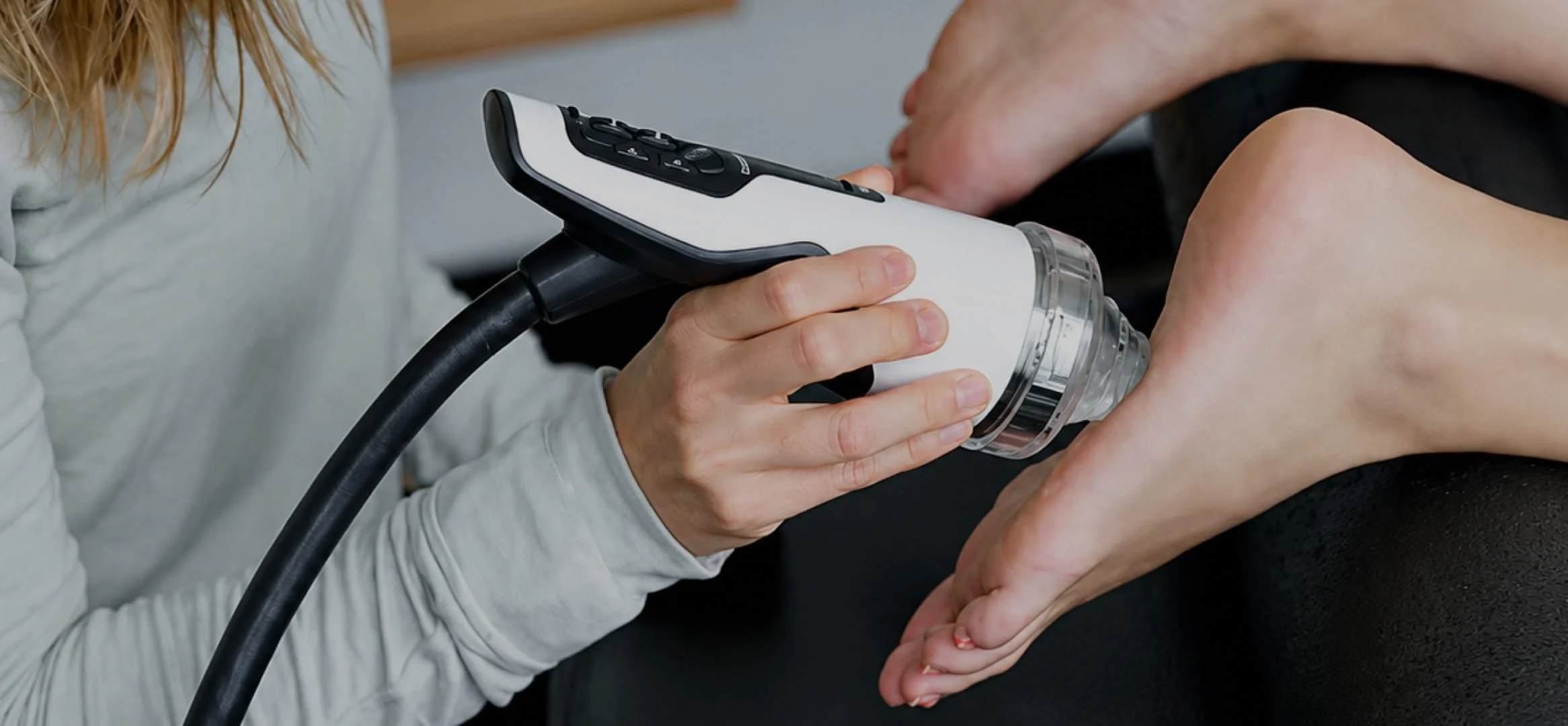
If you're a runner in Boulder (or a hiker, or a CrossFit junkie, or a triathlete…), chances are you've experienced heel pain at some point. For some, this is a momentary twinge in time, never to be heard from again. However, for most others, this heel pain becomes the nemesis of your mornings, of your runs, and of your everyday thoughts. Whether you're logging miles on Mount Sanitas, tackling technical trails in Chautauqua, or training for the BOLDERBoulder 10K, persistent heel pain can quickly derail your training. If rest, stretching, orthotics, or even general physical therapy haven't solved the problem, focused shockwave therapy for plantar fasciitis and heel pain may finally be the answer you’ve been searching for.
At Boulder Sports Physiotherapy, we provide Extracorporeal Shockwave Therapy (ESWT) for plantar fasciitis as part of a comprehensive plantar fasciitis treatment program for runners and active individuals alike. The key is “comprehensive” - pairing effective shockwave therapy with corrective exercises that target the biomechanical downfalls that contributed to your plantar fasciitis in the first place. Our goal is to help patients overcome chronic heel pain, improve deep tissue healing, and return to the trails they love—without surgery, injections, or wasting more time.
Why Does Plantar Fasciitis Take So Long to Heal?
Despite its name, plantar fasciitis is less about ongoing inflammation and more about the degeneration of the plantar fascia from repetitive overload (2). The plantar fascia is a thick band of connective tissue that supports your arch and helps transfer forces during walking and running. For instance, imagine your foot is a bow, and the plantar fascia is the bowstring. As you land, the bowstring stretches and stores energy. As you push off, the bowstring tightens and releases that energy, helping launch you into your next stride. When the plantar fascia is overloaded—because of a sudden increase in mileage, tight calves, weak foot or hip muscles, or inadequate recovery time—it has to absorb more force than it can tolerate. Tiny areas of tissue damage accumulate faster than the body can repair them, leading to the pain and stiffness associated with plantar fasciitis. Additional factors such as steep climbs, technical trails, high weekly mileage, and rapid elevation changes can increase mechanical stress on the plantar fascia.
Other common contributors to developing plantar fasciitis include:
Sudden increases in training volume
Tight calf muscles
Limited ankle and big toe mobility
Weak foot intrinsic muscles
Hip weakness
Inadequate recovery between runs (poor sleep, nutrition, stress management, and reduced down time between workouts)
These factors can exceed the tissue's ability to heal and strengthen, leading to the classic symptoms of plantar fasciitis:
Pain with the first few steps in the morning
Heel pain after sitting for long periods of time
Pain during the first mile of a run that may temporarily improve before returning later in the run and afterwards
Many runners find temporary relief with stretching, massage, taping, or more supportive/cushioned shoes. However, if the underlying tissue quality has deteriorated, then symptoms often return again.
Thus, the best approach to treating stubborn plantar fasciitis is to target the damaged tissues while working on the other contributing factors. Focused shockwave therapy - one type of ESWT - is designed to stimulate the body's natural healing response, making it particularly helpful for chronic cases lasting longer than three months (1).
How Shockwave Therapy Helps Chronic Heel Pain
One reason focused shockwave therapy for plantar fasciitis has gained popularity is due to its ability to address the biology of chronic tendon and fascia injuries rather than simply masking symptoms. In addition, several recent systematic reviews have found that ESWT significantly improves both pain and function for patients with chronic plantar fasciitis compared to placebo treatment (4, 5).
Focused shockwave therapy works by delivering high-energy acoustic waves to a precise depth within the injured tissue. Rather than spreading energy across a broader area, as radial shockwave does, focused shockwave concentrates its energy exactly where the damaged tissue is located. This allows it to reach deeper structures and more effectively stimulate the body's natural healing response, making it particularly well suited for chronic tendon and fascia injuries like plantar fasciitis.
Research suggests the acoustic waves of shockwave therapy may (3):
Stimulate new blood vessel formation (neovascularization)
Increase collagen synthesis
Promote remodeling of degenerative tissue
Reduce pain by altering nerve signaling
Improve long-term function and tissue healing
Shockwave therapy does not weaken connective tissue (unlike cortisone injections). Instead, it encourages the body's natural repair mechanisms while encouraging tissue growth.
What Does the Research Say?
Evidence supporting focused shockwave therapy for plantar fasciitis and other chronic injuries continues to strengthen. In fact, the 2023 Clinical Practice Guideline for Heel Pain/Plantar Fasciitis recommends considering ESWT for patients with persistent symptoms that have not responded to appropriate conservative management (2). Multiple randomized controlled trials and systematic reviews focusing on treatment using shockwave therapy have demonstrated significant improvements in:
Morning heel pain
Walking pain
Running tolerance
Overall foot function
Perhaps most importantly, these improvements often continue for months after treatment - some research shows after 12 months - as the tissue healing process continues (1, 4).
Is Shockwave Therapy Right for You?
If you feel like you’ve tried everything for your stubborn plantar fasciitis and are feeling lost in what to do next, then shockwave therapy may be the path that finally leads to a place of living without heel pain. You are likely a good candidate for shockwave therapy if you:
Have had heel pain or an injury for longer than three months
Have tried stretching, orthotics, or traditional physical therapy without lasting results
Want to avoid surgery or injections
Experience pain with running, hiking, walking, prolonged standing, pickleball, or even after sitting for too long
Have tenderness at the inside of the heel where the plantar fascia attaches
Many of our patients are runners training for local races, hikers preparing for Colorado's fourteeners, or active adults who simply want to enjoy playing pickleball with their friends and walking without pain. The sooner chronic plantar fasciitis is addressed appropriately, the easier and quicker it is to restore normal tissue health and prevent months—or even years—of recurring symptoms.
What to Expect with Shockwave at Boulder Sports Physiotherapy?
At Boulder Sports Physiotherapy, we believe successful treatment is more than treating pain—it’s about improving the integrity of the tissue, the efficiency of someone’s mechanics, and making sure our patients are strong enough to handle the activities they love to do.
Every evaluation—for plantar fasciitis and other injuries—includes a comprehensive assessment of (but not limited to):
Running mechanics
Foot and ankle mobility
Hip and lower extremity strength
Balance
Training history
Footwear considerations
Recovery and lifestyle habits
If you're an appropriate candidate, focused shockwave therapy becomes one component of your individualized rehabilitation plan. Most patients receive 3–5 shockwave treatments, spaced approximately one week apart (6). Sessions are brief and require no anesthesia or downtime from activity.
Your rehabilitation plan also includes:
Progressive strengthening and plantar fascia loading exercises
Running gait analysis and training when appropriate
Mobility exercises
Other manual therapies (i.e. dry needling)
Education on activity modifications
Research consistently demonstrates that combining these other modalities with shockwave therapy produces superior long-term outcomes compared to passive treatment alone (2).
Let’s Get You Back to Running
Whether your goal is completing the BOLDERBoulder, running Green Mountain, or simply enjoying casual morning runs in Boulder, chronic plantar fasciitis doesn't have to become your new normal. At Boulder Sports Physiotherapy, we combine focused shockwave therapy, in-depth movement analysis, and individualized rehabilitation plans to help you return to running stronger—and stay there. Schedule an appointment with one of our expert physical therapists and see how we can help you get past the nagging injuries and finally move stronger, together.
Frequently Asked Questions About Shockwave Therapy for Plantar Fasciitis
How many shockwave therapy sessions do I need?
Most runners improve with 3–5 treatments, although chronic cases may require additional sessions.
Is shockwave therapy painful?
Most patients describe it as mildly uncomfortable but very tolerable. The intensity is adjusted based on your comfort during the session.
Does insurance cover shockwave therapy?
Most insurance plans do not currently cover focused shockwave therapy. However, Boulder Sports Physiotherapy offers transparent cash-pay pricing, and many patients use HSA or FSA funds to pay for our services.
How is shockwave therapy different from a cortisone injection?
Cortisone injections primarily suppress inflammation and may provide temporary relief; however, do not stimulate cellular healing inside the tissue. Shockwave therapy actually stimulates tissue repair, making it a valuable option for chronic plantar fascia degeneration rather than acute inflammation.
Can I continue running?
Often, yes! Most runners can continue training with temporary modifications while progressing through rehabilitation and receiving shockwave therapy.
References
Gerdesmeyer, L., Frey, C., Vester, J., Maier, M., Lowell Jr, W., Weil Sr, L., ... & Gollwitzer, H. (2008). Radial extracorporeal shock wave therapy is safe and effective in the treatment of chronic recalcitrant plantar fasciitis: results of a confirmatory randomized placebo-controlled multicenter study. The American journal of sports medicine, 36(11), 2100-2109.
Koc, T. A., Jr, Bise, C. G., Neville, C., Carreira, D., Martin, R. L., & McDonough, C. M. (2023). Heel Pain - Plantar Fasciitis: Revision 2023. The Journal of orthopaedic and sports physical therapy, 53(12), CPG1–CPG39. https://doi.org/10.2519/jospt.2023.0303
Speed, C. (2014). A systematic review of shockwave therapies in soft tissue conditions: focusing on the evidence. British journal of sports medicine, 48(21), 1538-1542.
Sun, J., Gao, F., Wang, Y., Sun, W., Jiang, B., & Li, Z. (2017). Extracorporeal shock wave therapy is effective in treating chronic plantar fasciitis: A meta-analysis of RCTs. Medicine, 96(15), e6621.
Xiong, Y., Wu, Q., Mi, B., Zhou, W., Liu, Y., Liu, J., ... & Liu, G. (2019). Comparison of efficacy of shock-wave therapy versus corticosteroids in plantar fasciitis: a meta-analysis of randomized controlled trials. Archives of orthopaedic and trauma surgery, 139(4), 529-536.
Schmitz, C., Császár, N. B., Milz, S., Schieker, M., Maffulli, N., Rompe, J. D., & Furia, J. P. (2015). Efficacy and safety of extracorporeal shock wave therapy for orthopedic conditions: a systematic review on studies listed in the PEDro database. British medical bulletin, 116(1), 115.